Why Unit Price Predicts So Little
A lighting installation has two price tags. The first is the one on the quotation, paid once, and it is the only one most procurement processes compare. The second is the one the owner pays across the life of the installation — energy, replacement labour, spares, downtime and eventual disposal — and it is usually two to four times larger than the first, which makes the first a poor proxy for the second.
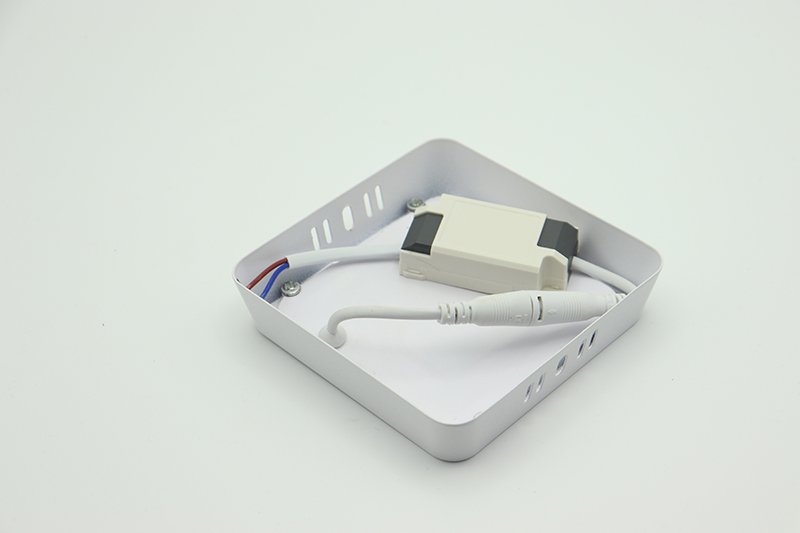
The reason is structural rather than commercial. A luminaire is a small assembly of an LED module, an optical system, a housing and a driver, and the driver is the component that usually fails first. When it does, the cost of the event is not the driver. It is the access equipment, the electrician's time, the disruption in an occupied hotel corridor or retail hall and, sometimes, the temporary lighting installed to keep the space usable. Those costs are identical whether the fixture cost little or much, so a cheaper fixture with a shorter driver life multiplies the largest cost line in the model.
The Lines That Belong in the Model
A workable comparison uses a fixed set of lines applied identically to every candidate. If a supplier cannot answer one of them, that is itself a result worth recording.
| Cost line | What it contains | How it is normally understated |
|---|---|---|
| Fixture cost | Unit price at the agreed specification, delivered | Compared as a bare price, with specification differences ignored |
| Energy | Fixture-level input watts, operating hours and tariff over the interval | Quoted from nominal LED package figures rather than system watts |
| Replacement parts | Drivers, modules and diffusers at the failure rate the manufacturer is willing to support | Assumed zero because the warranty has not yet expired |
| Labour | Access, isolation, removal, refitting and testing per replacement event | Omitted entirely, or counted as a swap with no access cost |
| Downtime and disruption | Lost trading hours, out-of-hours working premium, guest or tenant impact | Absorbed into "operations" and never attributed to the fixture |
| End of life | Disposal, recycling obligations and any packaging handling requirements | Ignored because it falls outside the project budget cycle |
Energy Is the Line That Swamps the Others
Over a long maintenance interval, the electricity a fixture consumes usually exceeds its purchase price, which is why system-level efficacy matters more than any other single number in the comparison. The trap is which wattage goes into the calculation. A figure taken at the LED package level, or at a nominal drive current, is not the input power the installation will pay for; the figure that matters is the fixture's declared input watts including the driver, measured at the drive current actually specified.
Three adjustments improve the estimate without requiring a lighting design. Use the actual operating hours of the space rather than a default, because a hotel corridor, a retail hall and an office floor have radically different duty cycles. Use the fixture-level wattage, not the module wattage. And where a control system is included, apply a realistic saving rather than the maximum, because dimming savings depend on how the space is genuinely used rather than on how it was commissioned.
Driver Failure Is the Dominant Maintenance Event
Drivers fail for reasons that are visible in data if you ask for it: an electrolytic capacitor rated at a lower ambient than the enclosure reaches, no thermal derating curve supplied, or a driver running near its maximum output with no headroom. This is the point at which two fixtures that look identical on a specification sheet diverge, and it is why the driver brand and model, the derating curve and the ambient temperature behind the lifetime claim belong in the specification.
Where a supplier can state which driver is used and show its derating behaviour, the failure rate becomes an engineering estimate rather than a guess. Where the answer is "a standard driver", the model has to assume the worst case, and the comparison should say so explicitly rather than hiding it in an average.
The Labour Multiplier
Replacement labour is the line that turns a small difference in quality into a large difference in cost, because it is priced per event and does not scale with the price of the part. Replacing a driver in a ground-level retail ceiling is minutes of work; replacing the same driver above a hotel atrium or in a facade at height requires access equipment, permits and out-of-hours scheduling, and can cost many times the part.
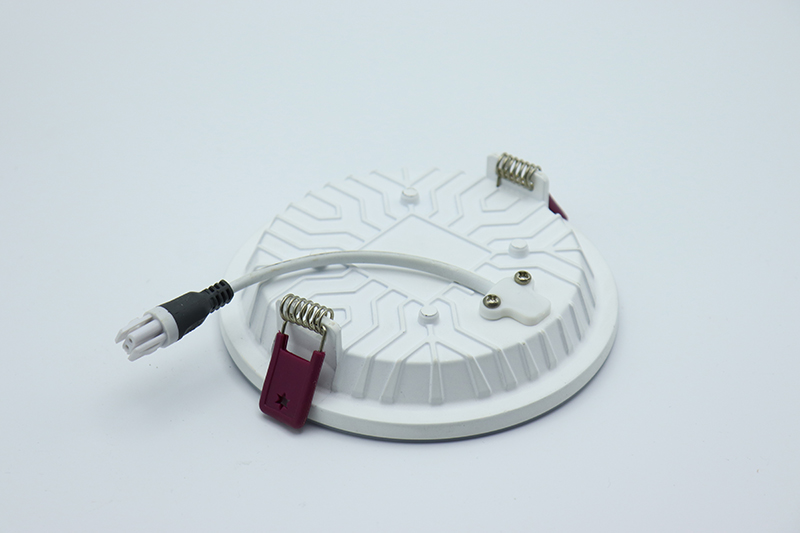
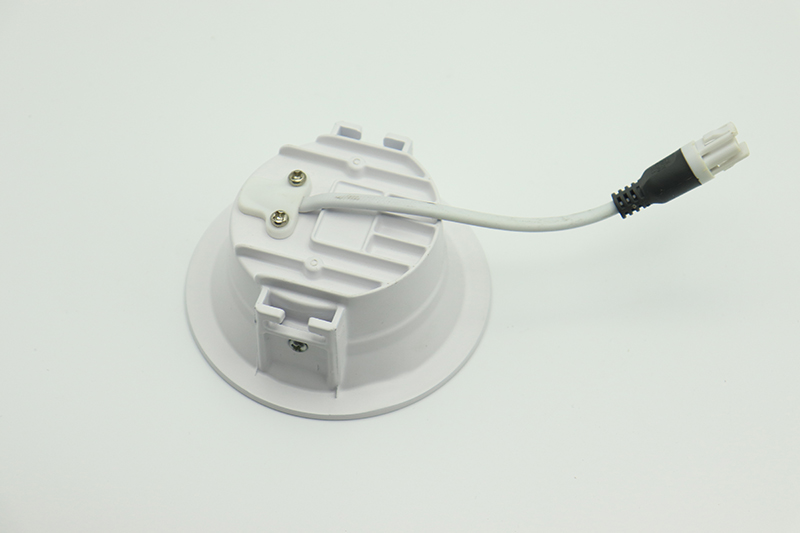
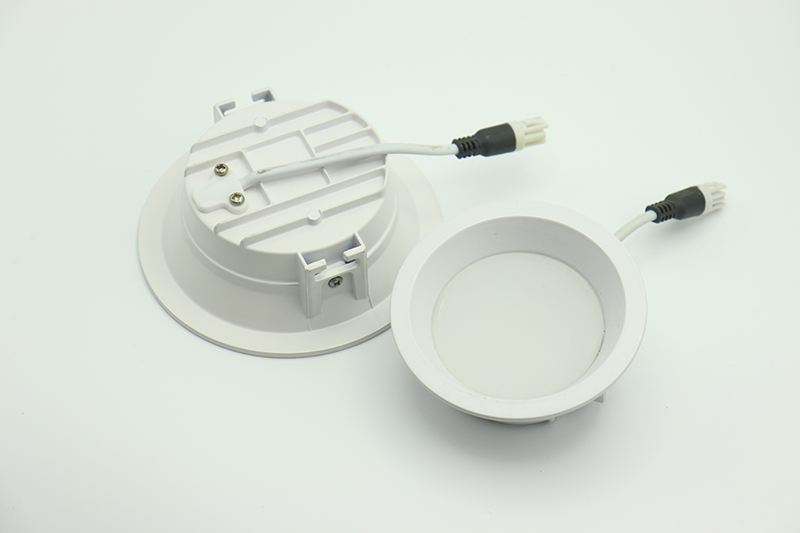
Two practical rules follow. First, price the labour per replacement event at the access conditions of the actual installation, not at a workshop rate. Second, consider the maintenance strategy the fixture makes possible: a fixture that allows a driver to be replaced from below without disturbing the optical assembly converts a difficult event into a simple one, and that design feature is worth more than a modest unit-price saving.
Spares, Warranty and Downtime
A warranty is only as valuable as the mechanism behind it. Three questions convert it into a cost line. What is the claimed period, and is it on the fixture or on the installation? What is the response mechanism — a replacement part shipped, or a site visit — and within what window? And are spares available at a stated price for a defined number of years after the order, which is the question that decides whether the owner can keep the installation consistent in year five?
A small spares holding, sized to the failure assumptions in the model, is usually cheaper than a single emergency replacement at height, and it belongs in the initial budget rather than in a later variation order. For projects with a phased handover, the spares allowance should be set against the whole installation rather than the first phase.
Building the Comparison
- Normalise the specification first — same lumen output, same beam distribution, same colour specification, same ingress rating; otherwise the price difference is meaningless.
- Fix the maintenance interval — the number of years over which the model runs, stated once and applied to every candidate.
- Use fixture-level data — system watts, maintained output and the driver derating curve, all from documentation rather than from a sales conversation.
- Price the labour — at the access conditions of the real installation, with the out-of-hours premium if the space cannot be closed.
- Add spares and disposal — a holding sized to the failure assumptions, plus the end-of-life handling cost.
- Compare the total, then compare the risk — a narrow win on a model built from unverifiable inputs is not a win.
Where a Cheap Fixture Still Makes Sense
The method does not argue that specification-grade products always win. What the model changes is the reasoning: the choice becomes an explicit judgement about expected service life rather than an assumption that the cheapest compliant fixture is the cheapest outcome. Two situations pull in opposite directions.
| Installation profile | Which line dominates | Defensible conclusion |
|---|---|---|
| Short operating hours, easy access, short expected life | Fixture cost | A lower-cost compliant fixture is the rational choice; document the assumption |
| Long hours, difficult access, ten-year expectation | Energy and labour | Pay for driver quality and serviceability; the unit price is a minor line |
| Occupied space that cannot close | Downtime and disruption | Prioritise access-friendly design and hold spares, whatever the unit price |
| Multiple identical areas with phased handover | Consistency | Buy the whole programme rather than phase by phase, so colour and driver batches match |
Stating the profile in the tender is what makes the decision defensible later, because it explains why two projects with identical schedules produced different procurement outcomes.
Summary
Compare lighting on the total cost of operating it, not on the price of acquiring it: normalise the specification, run the model over a fixed maintenance interval, use fixture-level electrical data, price replacement labour at the real access conditions, and add spares and disposal. Then ask which inputs the supplier could actually evidence. That last question is usually what separates the two quotations, and it is free to ask. Our downlight specification guide explains the driver, thermal and lumen-maintenance figures this model depends on, and further guides sit in our buying guides.